editorial

« Older Entries

Reviewing in a Vacuum.

Saturday, March 6th, 2010

Reviewers have a tendency to make comparisons with other examples of a medium. There are many reasons for this practice, but for newcomers to a medium it remains exclusionary. Whether the author is using it as lazy shorthand to aid understanding or from a desire to laud an expansive knowledge over the audience, the reader must be informed about the point of reference for it to be of any use.

This use of references is as common a practice in the gaming press as any other, perhaps more so thanks to the era the industry has grown up in allowing for such a rapid dissemination of products and opinion. Audiences are, for the most part, indoctrinated into the culture; aware through blogs and news sites of every major release they have even a passing interest in. Issues only arise when new people try to enter this impenetrable, elitist culture. A Zelda clone, or even a more generic term such ‘platformer’, must surely prove a near impossible barrier to entry for most newcomers.

Big bad guys.

Big bad guys.

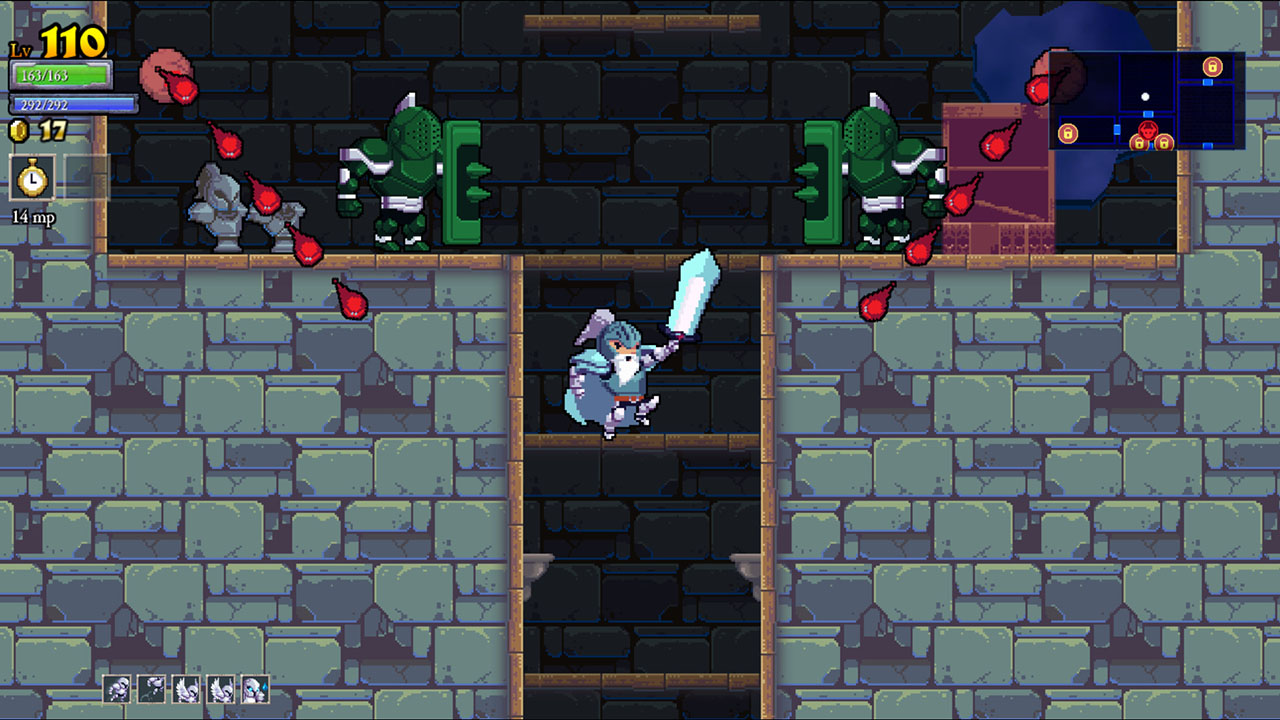
Recently the issue was brought to the fore courtesy of the game Darksiders. Reviews uniformly described the THQ title as Zelda meets God of War, and some people felt this portrayal was lazy. Maybe it was, but it was also descriptive. I instantly comprehended what was meant by this simple comparison. My understanding allowed the reviewer to move on to a deeper opinion of the whole experience rather than a mechanical break down, without exceeding the one thousand-word limit that typically signals the end of my attention span (for reading onscreen text at least).

Asserting that similarities shouldn’t be drawn in reviews and that each game should be judged on its own merits from within a vacuum is ridiculous. Hand my dad a PS2 and he will tell you how real the games all look, and then offer you a whisky and bore you with stories of Ireland. Ignoring what makes our opinion ours is disingenuous. If the reader doesn’t know the foundation of an argument then they cannot truly appreciate it.

Bigger bad guys.

Bigger bad guys.

Everything we experience informs our outlook; if we are unable to draw on our well of knowledge to explain our impressions then we are neutering our vocabulary. To state outright that other games shouldn’t be referenced when talking about another title would mean never again mentioning a previous game in a franchise or from the same team. We would have to turn a blind eye to advancements made and explain everything from the basest level in every article, because if a gamer doesn’t know Zelda it is safe to assume that the term ‘action RPG’ would be just as incomprehensible.

I suspect the bigger problem is that now there are so many people covering games. I sit with my RSS feed open and watch every day a new stack of reviews pour in for the latest big release. On occasion I have been known read each and every review of a game I am interested in, and I do begin to see patterns and trends emerge. Occasionally this can annoy, especially when I feel a writer is not addressing the elements of the game I believe are important or when their views differ wildly from my own.

Biggest bad guys.

Biggest bad guys.

Certainly if there is no qualification presented for a comparison it is problematic. A review that does nothing to expand on its flimsy comparisons tells the reader nothing. Simply put a bad review is a bad review. A well written piece will utilise accepted touchstones that have made their way into the gaming lexicon, giving context and creating a more concise read. Providing the author of a piece sufficiently communicates their opinion, without the need for extensive outside research, using such comparative examples can be a valuable tool.

Tags: Comparisons, Darksiders, God of War, Reviews, Zelda
Posted in editorial 2 Comments »

Due Diligence.

Wednesday, February 24th, 2010

Different sites have different mandates on the subject of at what point a review should be written. I used to believe that a reviewer should experience a game in its entirely before they could reasonably pass judgment. It is a view that has slowly eroded recently, leaving me unsure as to my own principles and questioning at what point I am qualified to write a review.

Initially my concept of finishing a game before reviewing was solid, every game on my own site has always been completed before anything was written. But playing Ultimate Band for review on Game People threw all of this in to question. Playing the Disney rhythm game I could be found repeatedly pumping my Wii remote above my crotch with no penalty for my constant, rhythmic ‘strumming’ which didn’t even come close to emulating the onscreen beat. I finished around half the songs offered with a variety of instruments, and concluded that it was fair to say I had seen enough.

The game that changed me.

The game that changed me.

It was peculiar how divided the decision made me. Maybe I was doing readers an injustice by not experiencing everything the game had to offer. But I knew that the template for the action wasn’t going to chance, and nor was my opinion. I set to writing the review feeling that I had been fair to both my readers and the developers.

I constructed a new internal guideline for my reviews. Based on the time I play and the genre/size of the game I ensure that on sites that do not require I finish a game that I at least give each it a fair amount of my time. I was happy with my new code until recently when the question was again reawakened by the narrative heavy Mass Effect 2 and Silent Hill: Shattered Memoires.

Narrative dependent titles have an implicit expectation that you will experience a story in its entirety. Similar to a movie it would be unfair to review it before it reached its conclusion. If I were to watch the first hour of The Sixth Sense and then review it my opinion would be very different to someone who watched it all. But it is impossible to dissociate a game’s narrative from its interactive elements. Again if The Sixth Sense required all of its audience have their toenails torn off while watching, then I would be justified in saying it doesn’t matter what the pay off is, it can’t be worth it and subsequently leaving after only five minutes.

Almost entirely incredible.

Almost entirely incredible.

Looking at Silent Hill and Mass Effect 2 both game’s finales sit in contrast to my opinion of the rest of the experience. Mass Effect 2 was for me an incredibly involving forty-hour experience; every moment (bar the mining) was a joy, until my final confrontation. Any ending of a story or game with an expansive and involving plot will always struggle to meet the high expectations established throughout the rest of the experience, and thus they are almost uniformly anticlimactic. In Mass Effect’s case end sequence in its entirety is an emotional sequence of events, but the last tiny fraction was a let down. I couldn’t even say it tarnished the rest of the game, but it did hit something of a bum note when it should have reached its crescendo.

Silent Hill takes the opposite approach. Incorporating two game styles, creepy atmospheric adventure and running in terror my opinion throughout Silent Hill oscillated between amazement at what the developers were trying to achieve, and dismay at the infuriating action sections. Discussion of the emotions that the game’s infuriating controls induce and how intentional they were aside, every moment spent fleeing your enemies during these sections were soul crushingly bad, yet instantly forgive when you get to the end and begin to realize what it was building to.

A strong ending can make up for a lot.

A strong ending can make up for a lot.

Now I am stuck in a quandary. Mass Effect 2’s slight disappointment did not alter my feelings about the experience. Maybe it is due to the length of the title, or perhaps simple that the mechanics were solid enough to have overlooked weaker narrative elements. Silent Hill’s ending however totally altered my opinion. Lasting only six or eight hours perhaps I was inclined to be more forgiving of the hour or so spent in the games broken action segments; looking back I am even starting to appreciate the real sense of apprehension the scenes created in me. But what it boils down to is that I could have reviewed Mass Effect 2 after ten hours and bar a throw away comment about the ending my conclusion would have been unchanged. Where as if I hadn’t finished Silent Hill my feelings would have been inclined towards the negative, rather than the overwhelmingly positive view I now possess.

So it is back to the drawing board with my guidelines. Currently I am leaning towards the idea that when left to my own discretion I play a game until I just can’t bring myself to play any more, assuming of course that I at least have ensured a solid grasp of the concepts. I arrived at this formula because personally I would not feel ‘cheated’ if any writer supplied their opinion in this manner, providing they clearly indicated what their exposure to the game entailed. It seems many disagree with this methodology however feeling entitled to reviews that encapsulate the complete experience.

I can understand arguing for completion, but it seems that with both the industry and distribution of information changing as rapidly as it is, changes in coverage’s content should adapt also. With game media moving almost exclusively to websites, speed of coverage and personality of the review are becoming increasingly valuable. Following someone with the same tastes, or drawing from hundreds of voices, allows us to choose what suits us personally. As players have more games to play and less time available a review that tells me that one persons experience was so bad it made the player put down the controller and never return is invaluable providing the writer frames what their opinion is based on sufficiently.

Tags: Journalism, Mass Effect 2, Reviews, Silent Hill: Shattered Memories, The Sixth Sense, Ultimate Band
Posted in editorial 4 Comments »

200X’s – A New Outlook.

Friday, February 5th, 2010

It was not really a random remark, but a question so simple that I had somehow never asked it of myself. My friend (and podcast co-host) Darren was visiting me in Japan and we were considering my return to the UK when he asked, ‘Well, what do you really want to do?’

Whenever I had considered my options up until that point I always though about my proven talents and what would make me money while at the same time not driving me mad. I had considered opening a bar, teaching, maybe even trying to earn a PhD. But in all my deliberation one clause had been missing, and Darren asked it, ‘…really want…’

In the third grade of middle school Darren and I had actually tried to write a gaming magazine for our school. I remember that I had no understanding of the bracketed comments from Ed. I knew it referred to the editor, but my idea of what that meant was hazy at best. Believing them to be humorous I inserted random ‘funny’ comments throughout my childish prose. We never finished a single issue of our ‘magazine’ but my passion for gaming never diminished.

My answer came to me faster than I had ever imagined, ‘I want to write about games’. Yes, not the most eloquent of responses, but my point was clear enough. My doubts about any ability I had to actually to achieve this were secondary to the question posed to me, because what I really wanted was to talk about games as a profession.

It was only after moving to Japan that I began to realise there was a new audience for games. While the foreign populous of gamers would be hard to define as ‘average’ their numbers were liberating. I began having adult, and often drunken, conversations about all facets of gaming. Design, story and cultural implications were reoccurring topics in which I found myself consistently and vehemently defending games as more than mindless entertainment.

Edge is top of the line, but GamesTM seemed to take more joy in their writing.

Edge is top of the line, but GamesTM seemed to take more joy in their writing.

My isolation from English gaming magazines at this time turned me to new sources for my information. Suddenly rather than GameTM and Edge I was reading numerous websites and discovering that while much of their content was reminiscent of magazines I read when I was younger, yet every site hid an undercurrent of mature discussion in some of their posts.

As my western friends slowly returned to their home countries my debates on the merits of gaming abated. I turned to websites for information and dialogues. I found the best of the online receptacles of information could flit within single articles between the serious considered opinions I held, and a jovial humour that ensured the writing never became stale.

I was at this time that I turned to podcasts. I found them an invaluable source of information that didn’t require the same engagement as reading an article. Shows that could last for hours gave voices to writers, and shows like GFW Radio gave me a broader view of current topics in the media and insight into the construction of articles while never ceasing to entertain.

The podcast I aspire to.

The podcast I aspire to.

All this brings me to the birth of DoFuss.net. Not as a career, but as a learning tool and portfolio. In creating the site, I changed the way I think. Everyday sees the genesis of a new topic for discussion that I may or may never realise in text. I now can’t imagine attending events or following the game industry without the critical eye and focus my writing has given me. It is a change I adore.

I confess my reflections of the decade have been somewhat personal. But I don’t think I am alone in my experience of the last ten years. Blogging has exploded, offering more outlets for opinion and information. It is a trend I am sure will only continue to grow and while I embrace it I do bemoan the fact that the noise sometimes makes it harder to separate the ‘Okami’ from the ‘Imagine Horses’.

Thank you Darren, for inspiring this obsession of mine and letting me discover what I really wanted to do. Also thank you to any and all who read this or my other articles on DoFuss (or the other sites I contribute to) I appreciate your time and input (especially Feitclub and Blokey for their continuing contributions).

Next post will be back to gaming proper, I promise.

Tags: Darren, DoFuss, Edge, GamesTM, GFW Radio, Journalism
Posted in editorial 6 Comments »

200X’s - The Origin of My Gaming Pretentiousness (Or - ‘The Last Time I Intend to Write About The Path’).

Monday, January 25th, 2010

The gaming audience has expanded in the last decade. From the pastime of children and cool/geek dads, games have widened their reach to embrace almost everyone. Whether it is annoying you with Mafia Wars invites on Facebook, or quietly playing Sudoku on an iPhone, the chances are each of your friends spends at least a small percentage of their life ‘gaming’ (even the sporty ones you think looks down their nose at you).

Casual gamers (or non-self identifying gamers) of course make up a vast proportion of the gaming populous, people who use social games as a mild distraction between emails at work. But the expansion of gaming’s acceptance isn’t limited to these ‘uncommitted’ groups. The children who used to play are now professional people and, contrary to the protestation’s of their mother, they never grew out of gaming.

Everyone plays games.

See, everyone plays games.

As gamers aged their interests outside gaming diversified, and they wanted this reflected in their games. New genres emerged to appeal to these new demographics. Games designed to cater for ever facet of life could be found. Social, party and casual games all bought the hobby out of the bedroom and in to the public consciousness. Even traditional games started to see a change, with mature titles (in the literal sense of the word, not gore and oversized boobies) starting to gain visibility along with the stereotypical ‘kiddie’ diversions.

A mature development community, eager to stretch their creative legs, met this audience. From the big budget boxed titles to smaller downloadable titles, more variety and risks began to be seen in the topics games addressed.

Scattered among this wealth of new titles are products that it would be hard to clarify as games in the traditional sense of the word. While some have argued that they are games because you can ‘play’ them, I maintain that they are more akin to interactive art. Programs that allow artists to create playgrounds, allowing the audience to interact with their vision in a manner no other medium could.

The Path is both magical and nightmarish in the same breath.

The Path touched and amazed me.

Which brings me to my memory of the last decade, my discovery of The Path. I had intended to make my decade memories less recent but I find it hard to ignore the impact one 2009 title had on me. I have written extensively about it already, extolled the virtues of the game and its developers (Tale of Tales) at length on numerous sites. Yet still I feel a need to revisit it.

Perversely I am sure I have spent more time writing about The Path than I ever did playing it, but that is exactly why I am so impressed by it. Like any piece of art it stays with its viewer after the experience itself is finished. It inspires conversations and debates for me to this day and now informs my outlook on the medium. These statements are by no means exclusive to The Path, but while most ‘games’ just affect my view of gaming, The Path that directly challenged my views of art and the world before it tried to entertain me.

To further elaborate on The Path would be a disservice to the developer/artists at Tale of Tales. To ask you see their work, its fragility and innocence, is the best compliment I can pay them (even if you only try the demo). If you do, pay attention to your character when she idle, to the artefacts on screen as you move through the world, think about what they were trying to convey through every element of the design, and the story they wanted to tell. If you feel nothing, then it simply wasn’t a piece of art that spoke to you; there will be some that do, if you continue to keep an open mind about the titles you consume.

Every Day the Same Dream is another thought provoking game.

Every Day the Same Dream is another thought provoking game.

I had always though games were capable of being art but The Path was my first experience with something committed to the feeling and message the designer/artist wanted to produce. Since then I have delved deeper, learnt of other games that managed to be just as thought provoking (such as “Every day the same dream”), but The Path was my first and continues to hold a special place for me.

Tags: 200X, Art, Every day the same dream, Games as Art, The Path
Posted in editorial 3 Comments »

« Older Entries
  • Gaming and J-culture
  • Contact us at:

    Alex - alex[at]dofuss[dot]net

    Darren - darren[at]dofuss[dot]net

  • Recent Posts

    • Reviewing in a Vacuum.
    • The DoFuss Show – Dedicated to Claire (and Miki).
    • Due Diligence.
    • PixelJunk Shooter - PSN. (Yes, a review. It has been a while).
    • DoFuss Update.
  • DoFuss Radio Download Page
  • My Tag Cloud

    • 360
    • TGS
    • PS3
    • Podcast
    • Japan

  • Categories

  • DoFuss's Haiku

      follow me on Twitter
    • [Valid RSS] subscribe to the podcast
    • Affiliate links

      • Feitclub
      • Game People
      • Gaming Spree
      • Go Gaming Giant
      • Original Gamer
      • Play Devil
      • TGSN.co.uk
      • UUDDLRLRBA Forums
      • Videogame Reviews
      • Xboxer 360